This newsletter was sent May 17, 2016. If you’d like to receive our next bi-weekly digest full of a curated collection of resources, workshops, policy highlights, and action items that affect children and youth with special health care needs, please sign up here.
NEWS
Assemb. Tony Thurmond Appointed To State Interagency Coordinating Council On Early Intervention
Governor Brown announced the appointment of Assemblymember Tony Thurmond to the State Interagency Coordinating Council (ICC) On Early Intervention in a May 11 press release. Comprised of parents of children with disabilities, early intervention service providers, health care professionals, and state agency representatives, the ICC encourages a family-centered approach, interagency collaboration, and provides advice and assistance to the Department Of Developmental Services. Assemblymember Thurmond has proven to be a strong champion for children and youth with special health care needs (CYSHCN) and fills a legislative position on the ICC that has been empty for nearly a decade. To read more about the ICC, click here.
Amendments Made To SB 586, California Children’s Services Redesign Bill
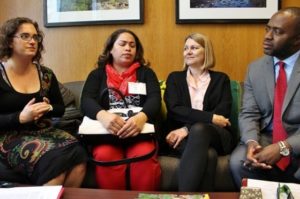
Senate Bill 586 addresses the future of California Children’s Services (CCS) and the proposed plan to transition some children currently covered by CCS into managed care. Amendments to the bill were much in line with statewide advocates’ recommended principles and deal with processes and protections that ensure CYSHCN are given the best systems of care possible. All further amendments to the bill will be addressed in the policy bill process. To read the revised version of the bill, click here.
Governor Brown Passes State Budget, Revisions Include Modest Spending Increases
On May 13, Governor Brown released California’s 2016-2017 revised budget plan. Although it contains minimal spending increases, the budget does implement several proposals aimed at improving economic stability, including funding for Medi-Cal and services for people with developmental disabilities. A large revision allows for resources to cover the thousands of undocumented children who are now eligible for Medi-Cal. To read highlights from the revised budget, click here.
How The Final Managed Care Rule Applies To Children And Youth With Special Health Care Needs
The Centers For Medicare And Medicaid Services (CMS) recently published its final rule which updates managed care guidelines. According to preliminary analysis from the National Academy For State Health Policy (NASHP), the rule gives states significant flexibility in making changes designed to modernize Medicaid and Children’s Health Insurance Programs while improving quality of care. As for how the rule applies to CYSHCN, states retain the ability to enroll some or all of their CYSHCN in managed care, and states that mandatorily enroll these children will need to ensure their families have the option to change health plans. To read a blog post from NASHP on how the final rule further applies to CYSHCN, click here, and to check out a list of upcoming CMS webinars on the final rule, click here.
Senator Lara Stops In San Francisco On Statewide Tour To Promote Enrollment In New Medi-Cal Expansion For Undocumented Children
Joined by various elected leaders and community partners, Senator Ricardo Lara gave a press conference on May 12 at the Mission Neighborhood Health Center in San Francisco. As part of his seven-stop outreach and enrollment “#Health4AllKids” tour, Senator Lara and advocates provided insight to attendees and families on the new expansion, which officially went into effect yesterday. An estimated 170,000 are now eligible for health care. To read more about the enrollment tour and new law, click here.

GIVE INPUT
Are You Prepared For An Emergency? Create A Short Video To Help Inspire Other Families Of CYSHCN To Think About Disaster Planning And Win $100
Preparing for an emergency is especially critical for families of CYSHCN. In order to spread disaster preparedness awareness, Family Voices National is running a video contest in hopes of spotlighting real stories that show how emergencies can impact families of CYSHCN. Accepted videos will win $100. Submissions can be simple cell phone stories ranging from 1.5-3 minutes in length, and videos must be submitted by May 31. For more information, click here.
Support AB 2004: Hearing Aids For Minors
On May 4, the California Assembly Health Committee voted in favor of AB 2004, sending the bill to the Assembly Appropriations Committee. AB 2004 requires that health care service plan contracts or health insurance polices renewed on or after January 1, 2017 cover hearing aids for enrolled minors. As the bill is being reviewed by the Appropriations Committee, it’s important that they hear from families about why they support AB 2004 and how it would impact them. To show that you’re behind the bill, consider writing a letter of support. You can find a sample letterhere. Email your letter to Lisa Murawski, the appropriations consultant for the bill, and Nardos Girma, assistant to author Assemblymember Richard Bloom. To read more about AB 2004, click here.
RESOURCES
Publication: Designing Systems That Work For Children With Complex Health Care Needs
The Lucile Packard Foundation For Children’s Health led a December symposium titled “Designing Systems That Work For Children With Complex Health Care Needs” aimed at discussing issues such as care coordination, national health policy, self-management support, and financing. To read the proceedings from the symposium that elaborate on potential solutions and ongoing issues in systems of care, click here.
Accessible Technology Resource Page Added To ADA.gov Website
Addressing enforcement, technical assistance, regulations, and technology initiatives, this new section of ADA.gov is a hub for all things assistive technology (AT). Among other things, you can access sample letters to help covered entities understand their ADA obligations with regard to AT, access a catalogue for accessibility best practices, and browse federal initiatives. To view the page, click here.
New Condition-Specific Transition Toolkits Available From The American Association Of Pediatrics And Got Transition
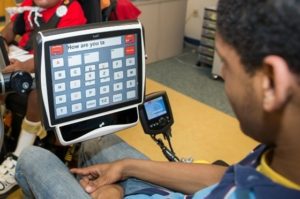
In order to address the gap that occurs between pediatric and adult health care, the American Association Of Pediatrics released six new condition-specific toolkits modeled after Got Transition’s Six Core Elements Of Health Care Transition. Toolkit topics include: general internal medicine for adults with developmental and physical disabilities, cardiology, endocrinology, hematology, nephrology and rheumatology (gastroenterology coming soon). To access the toolkits, click here.
Join The Lucile Packard Foundation For Children’s Health Newsletter!
Published twice a month, this newsletter provides excellent resources for families of CYSHCN. To sign up and also view past issues of the network newsletter, click here.
WEBINARS
May 18: The Relationship Between Fetal Alcohol Spectrum Disorders And Attention-Deficit Hyperactive Disorder
Sponsor: National Organization On Fetal Alcohol Syndrome
More information and registration here.
May 19: Reducing Stress In Children With Learning And Attention Differences
Sponsor: Learning Ally
More information and registration here (you must first create a free account).
May 23: Medical Home: Patient Centered Communication
Sponsors: The Johns Hopkins School Of Medicine and the New-York Mid Atlantic Consortium For Genetic And Newborn Screening Services
More information and registration here.
May 24: The Disability Integration Act And Why It Matters To You
Sponsor: United Spinal Association
More information and registration here.
May 25: Coordinating Care For Kids: School Nurses Linking With The Medical Home
Sponsor: National Center For Medical Home Implementation
More information and registration here.
May 26: Coding For Chronic And Transition Care Management And Pediatrics
Sponsors: The Lucile Packard Foundation For Children’s Health and the American Academy Of Pediatrics
More information and registration here.
May 26: Becoming ABLE Ready: Choosing The Right Program For You
Sponsor: National Disability Institute
More information and registration here.
May 31: Changing Relationships: How To Foster Effective Communication With Patients And Families
Sponsor: National Center For Medical Home Implementation
More information and registration here.
June 14: Emerging Treatments In Sickle Cell Disease
Sponsor: California Sickle Cell Resources
More information and registration here.
UPCOMING CONFERENCES
June 25-28: Spina Bifida Association—41st Annual National Conference, Bloomington, MN
For more details, click here.
November 10-13: The National Federation For Children’s Mental Health—27th Annual Conference, Phoenix, AX
Further details, including a call for presentation proposals, will be available in the next two weeks. Visit FFCMH’s website to find out more.
ARTICLES
CORRECTION
In our last newsletter, we incorrectly stated that Daniel Weintraub was the editor of California Healthline. He is the editor of the California Health Report.